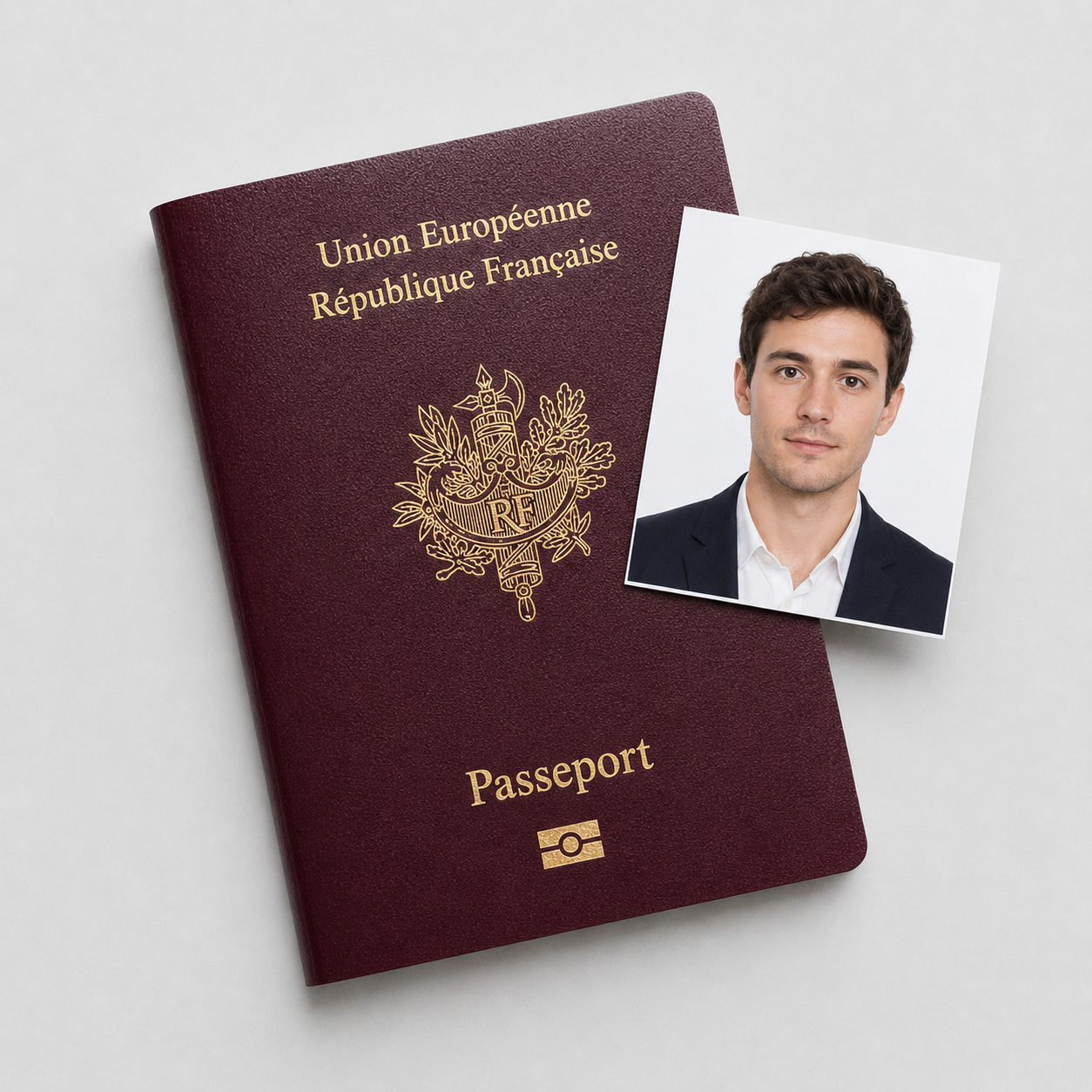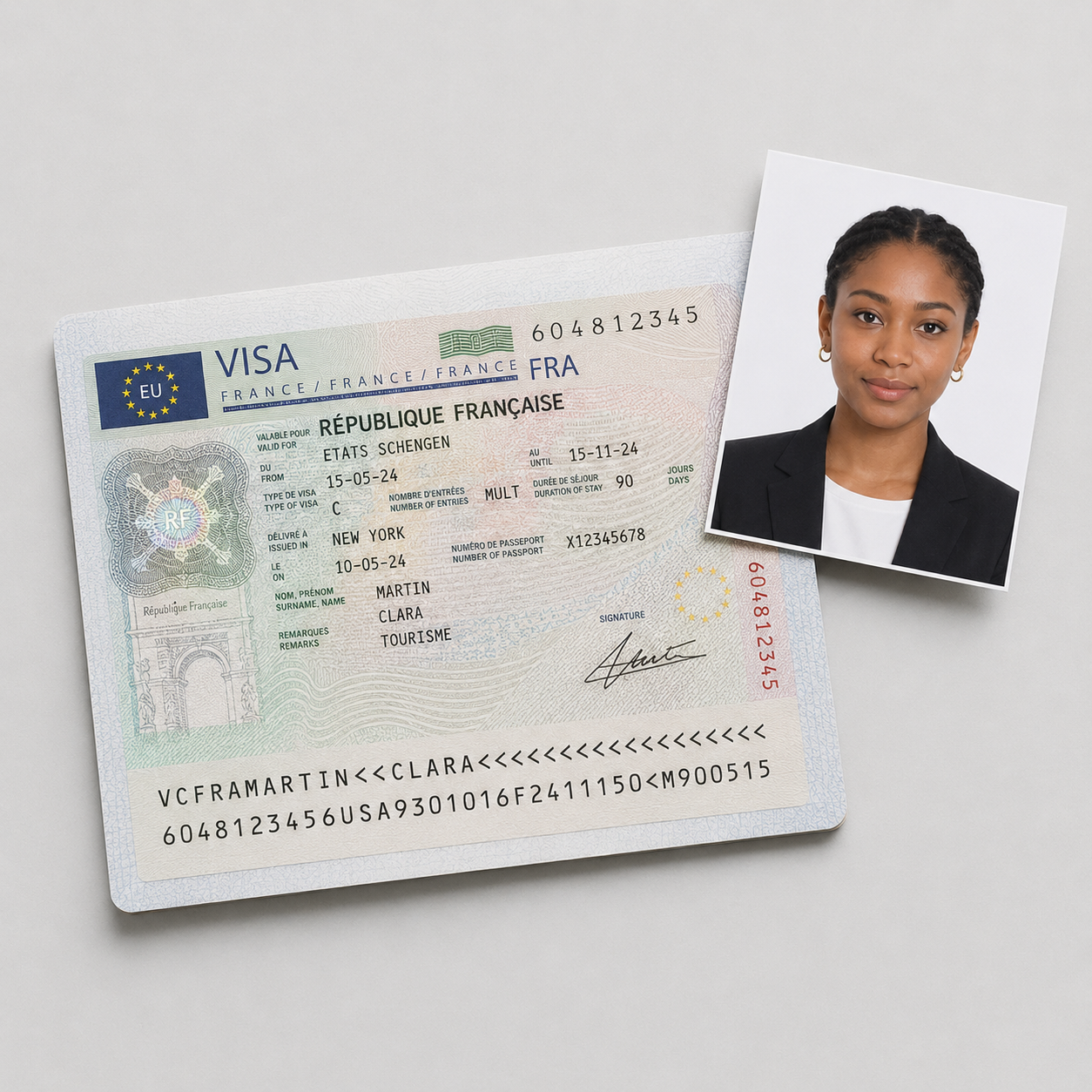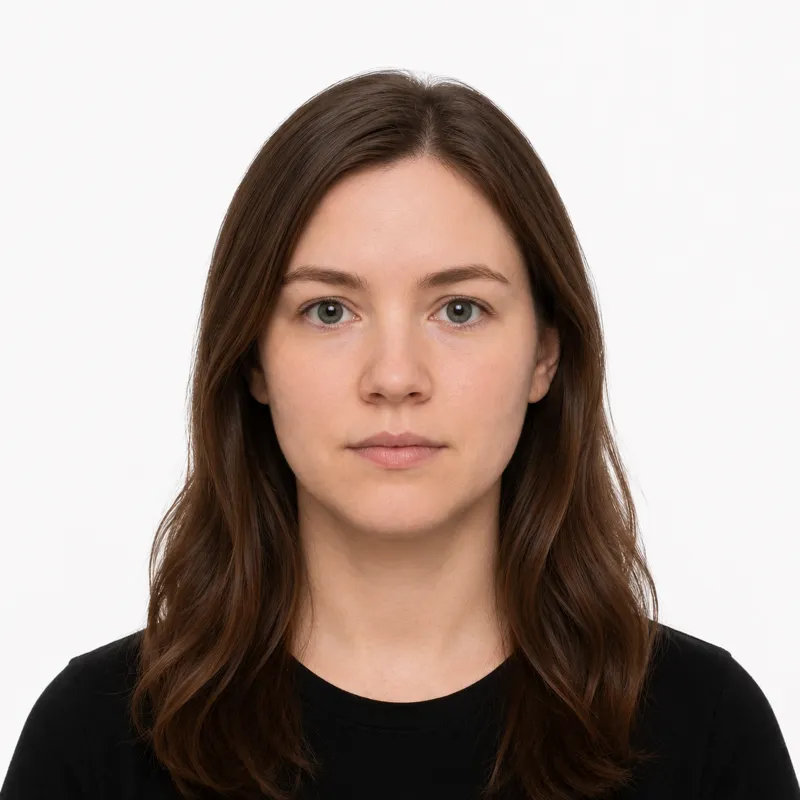
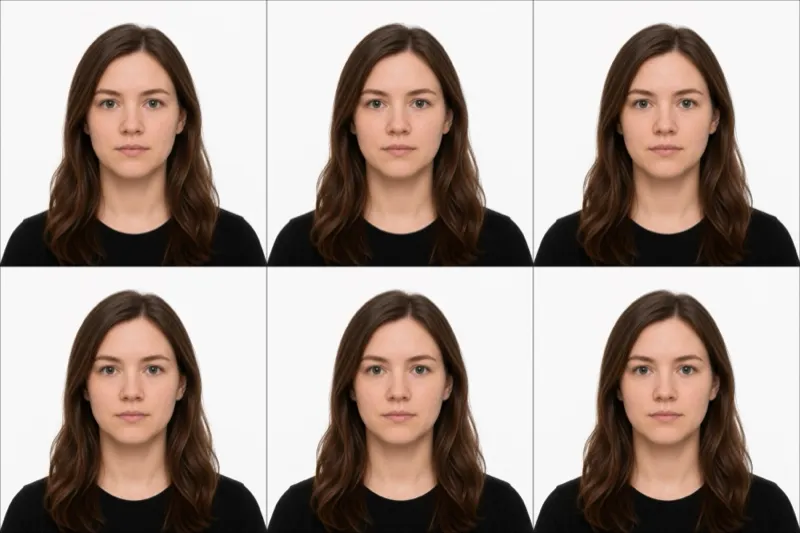
The single most common reason a French permis de conduire photo bounces is the background. People use plain white, the way almost every other country requires, and France rejects it outright. The French standard reads: “Le fond blanc est interdit.” White is forbidden. You need a uniform light grey or light blue background instead. Get that one detail wrong and nothing else about the photo matters.
The second thing that catches people out is that France often does not want a paper photo at all. It runs the ePhoto (photo numérique) system: an approved booth or photographer captures your image and gives you a digital code that you type into your online application. More on that below, but plan for it from the start.
The official requirements
France applies one biometric photo standard across its official documents, and the permis de conduire follows it. A photo that misses any of these is rejected:
- Size: 35×45 mm
- Background: uniform light grey or light blue. White is prohibited
- Head size: 32 to 36 mm from chin to the top of the skull, roughly 70 to 80 percent of the photo height
- Expression: neutral, mouth closed, both eyes open and clearly visible
- Head position: straight, facing the camera directly
- Glasses: allowed only with thin frames and clear, non-reflective lenses
- Recency: taken within the last 6 months and resembling your current appearance
- Quality: sharp, in colour, evenly lit, no shadows
How to take a compliant photo
The background is the part to solve first. A plain white wall will not do here. You want a uniform light grey or light blue surface behind you, with no folds, patterns, or objects in shot. A pale grey wall, or a light blue sheet pulled flat, works well. If you cannot find one, shoot against a neutral wall and replace the background digitally with a compliant light grey or blue.
Lighting matters as much as the surface. Face a window so soft, even daylight hits you from the front. Overhead lights throw shadows under the eyes and onto the background, and a shadow on a light-coloured background is one of the easiest ways to fail. Keep yourself far enough from the wall that you cast no shadow on it.
Have someone else take the photo from about a metre and a half away, at eye level. Selfies distort your features and almost always frame the head wrong. Look straight at the lens with a neutral expression, mouth closed, both eyes open, and hair clear of your face. Then crop to 35×45 mm with your head filling 70 to 80 percent of the frame, chin to crown.
Why photos get rejected
French booths and the ANTS upload check reject the same handful of problems repeatedly. Each one, and the fix:
- White background: the top failure for anyone used to other countries. Reshoot or replace the background with light grey or light blue.
- Shadow on the background: a light surface shows every shadow. Move away from the wall and light yourself evenly from the front.
- Head too large or too small: it must be 32 to 36 mm chin to crown. Recrop or reshoot from the right distance.
- Reflective or tinted lenses: glare on the glasses hides the eyes. Use clear lenses, or remove the glasses.
- Thick frames: heavy frames cover too much of the face. Switch to thin frames or take the glasses off.
- Mouth open or smiling with teeth: keep a neutral expression with the mouth closed.
- Photo older than 6 months: it must reflect how you look now.
What to wear (and not wear)
There is no formal dress code, but a few choices reliably cause problems against France’s light-coloured background.
Avoid: very pale or light grey tops, which blend into the background and blur the outline of your shoulders. Hats and caps are out, as are headphones, earbuds, and anything covering the face. Reflective or tinted glasses fail every time.
Fine: ordinary everyday clothing in a darker, solid colour that stands out against the light background. Light, natural makeup is fine. Religious head coverings worn daily are accepted provided the full face stays visible from the bottom of the chin to the forehead.
Because the background is light, a darker top does double duty here: it keeps your shoulders defined and makes the whole photo read as cleaner and more compliant.
Where to get your photo
The practical question in France is not just price, it is whether the option gives you the ePhoto digital code your online application needs. Here is how the choices compare:
| Option | Cost | Gives ePhoto code? | Notes |
|---|---|---|---|
| Photo booth (cabine agréée) | ~€6 | Yes | Found in stations and malls; prints and code |
| Photographer (photographe agréé) | ~€10–15 | Yes | Can advise on framing and glasses |
| Online tool (this site) | $1 | No | Compliant preview and print; check before you book |
| Photo at home | Free | No | Easy to get the background or head size wrong |
An online tool is the cheapest way to get a compliant image to check your framing, background, and head size before you spend money, but it will not issue the official ePhoto code, so treat its output as a preview and a print-ready file rather than the final submission for an online application.
A paper photo is still accepted in some cases, so an approved photographer or booth print covers you either way. If you are applying online through ANTS, the digital code is what the system asks for.
Submitting your photo (the ePhoto code)
This is where France differs most. When you visit an approved booth (cabine agréée) or an approved photographer (photographe agréé), they capture your photo and give you an ePhoto slip carrying a photo-signature code, often a string starting with a few letters and numbers.
When you fill in your permis de conduire application online at ANTS, you enter that code instead of uploading or posting a physical picture. The system retrieves the linked photo and signature directly. There is frequently no paper photo to mail at all.
If your particular application route still asks for a printed photo, hand in the 35×45 mm prints the booth or photographer gives you alongside the slip. Either way, the safest path is to obtain your photo from an approved French source so the code and print are both valid, and to confirm the background is light grey or blue before you leave.
Ready to skip the studio?
Upload a selfie and get a compliant photo in 2 minutes.
Sources & References
This guide is fact-checked against official government publications and updated regularly to reflect the latest requirements.
- [1] Service-Public — Photo d'identité pour un titre officielservice-public.gouv.fr
- [2]