The official requirements
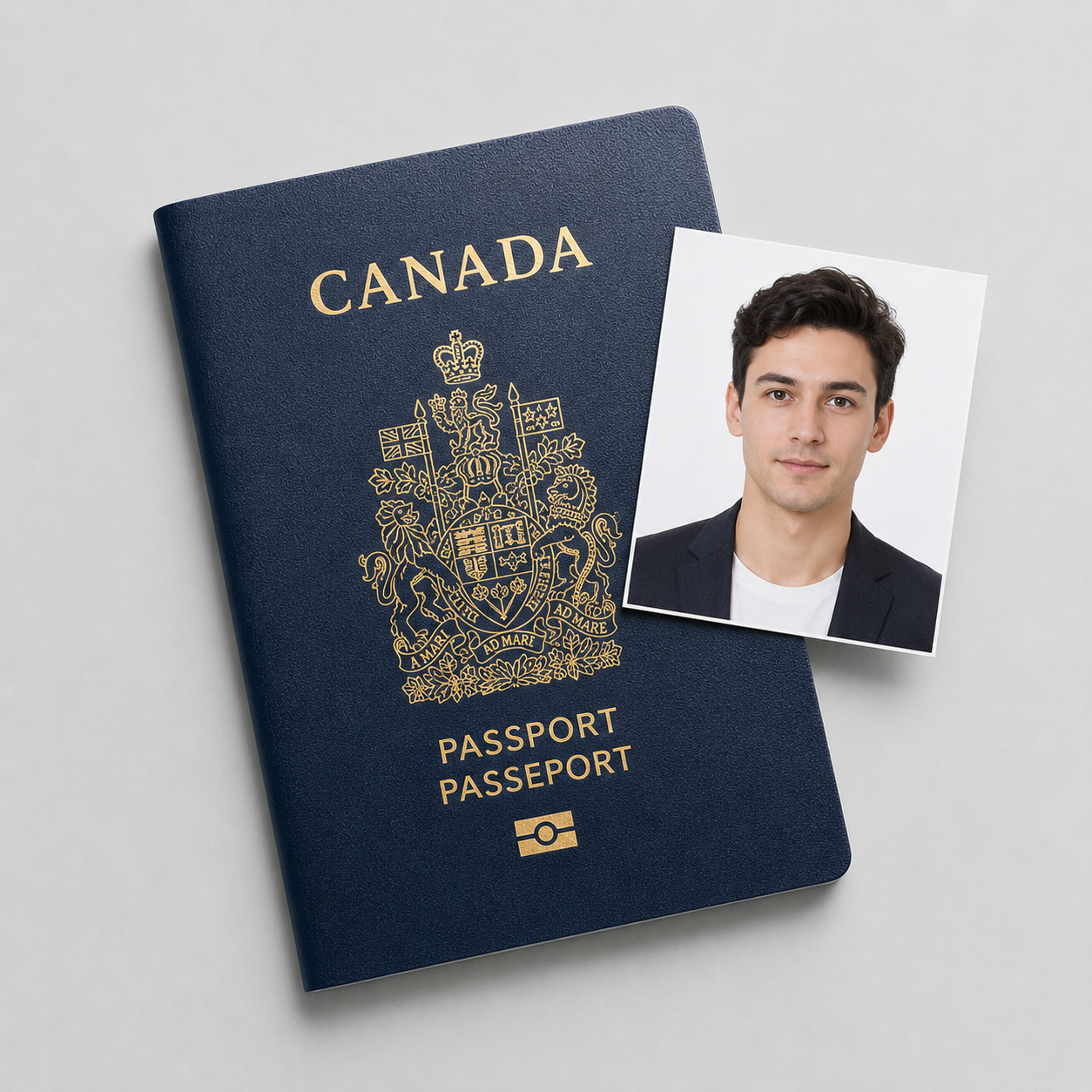
Immigration, Refugees and Citizenship Canada (IRCC) sets the spec for the Temporary Resident Visa (TRV), study permit, and work permit photo. A photo that misses any of these is refused:
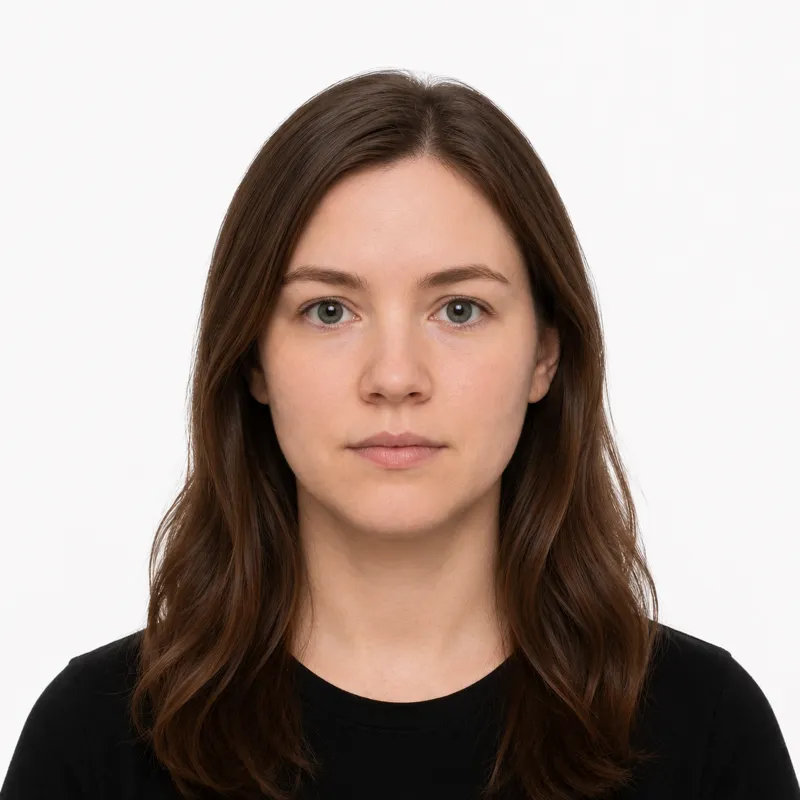
- Size: 35×45 mm (width × height), portrait — not the 50×70 mm used for Canadian passports and PR cards
- Background: plain white or light-coloured, uniform, no shadows
- Head size: 31–36 mm from chin to crown of the head
- Expression: neutral, mouth closed, both eyes open and clearly visible
- Glasses: clear prescription glasses are allowed; no sunglasses or tinted lenses, and no glare on the lenses
- Recency: taken within the last 6 months
- Color: color photo only, true skin tones, no filters
For an online portal application through the IRCC Permanent Residence Portal or visa application portal, the digital file must be a JPEG/JPG, at least 35×45 mm at 300 dpi (roughly 420×540 pixels), and no larger than 4 MB.
For a paper application, the photo must be printed on photo-quality paper, and the back of one print must be stamped or written with the photographer’s or studio name, the studio address, and the date the photo was taken.
How to take a compliant photo
The 35×45 mm size is the same one most of the world uses for visas, but IRCC is strict about head height and the back-of-photo stamp for paper applications. If you’re shooting it yourself:
- Stand 4–6 feet from a plain white or pale wall, far enough from it that no shadow falls behind you.
- Face a window for even, soft front light. Avoid overhead bulbs and direct flash — both cause shadows under the eyes or glare on glasses.
- Have someone else take it from chest height, straight on. Selfies distort facial proportions.
- Look directly at the lens. Neutral expression, mouth closed, hair pulled clear of the eyes.
- Crop to 35×45 mm with the head measuring 31–36 mm chin to crown — or upload the shot to a tool that crops to the IRCC TRV spec for you.
If you’re submitting on paper, the print itself must be on photo paper and carry the photographer’s details on the back. Home inkjet prints on plain paper get refused.
Why photos get rejected
The TRV photo rejections IRCC sees repeatedly, with the fix for each:
- Wrong size — the TRV is 35×45 mm. Photos cropped to the 50×70 mm Canadian passport size are refused outright. Re-crop or re-shoot to 35×45 mm.
- Head outside 31–36 mm — too large or too small chin-to-crown. Re-crop, or re-shoot from the right distance.
- Sunglasses or tinted lenses — only clear prescription glasses are accepted, and even those must be glare-free. If your everyday lenses are transition or tinted, take them off.
- Glare on glasses — front-lit photos can bounce light off the lenses. Tilt the chin very slightly or remove glasses.
- Non-white background — patterned, dark, or coloured walls fail. Use a plain white or very pale wall, or replace the background.
- Shadows — on the face or behind the head. Move further from the wall and use even front light.
- Photo older than 6 months — IRCC checks the date on the back of paper prints. Use a recent photo.
- Missing photographer’s stamp on paper prints — required on the back of one print for paper submissions.
What to wear (and not wear)
The glasses rule is the one that catches people: IRCC accepts prescription glasses for the TRV (unlike the Canadian passport, which bans them), but tinted, transitions, or reflective lenses are refused, so if your everyday lenses photograph dark, take them off.
Avoid: sunglasses, tinted lenses, hats or caps, headphones, uniforms, anything that casts a shadow on the face. A white or very pale top can blend into the white background — wear a darker, solid color instead.
Fine: ordinary everyday clothing, light makeup that keeps your everyday look, clear prescription glasses (with no glare or heavy frames hiding the eyes), religious head coverings worn daily (the face must stay fully visible from forehead to chin and from one ear to the other), and medical devices worn daily.
Where to get your photo
Most TRV applicants apply from outside Canada — India, China, the Philippines, and Nigeria are the largest sources. Options vary by where you are:
| Where | Price | Appointment | Speed | Digital file | Notes |
|---|---|---|---|---|---|
| Shoppers Drug Mart (Canada) | ~CAD $17.99 | No | Same day | No | Confirm “Canada visa” size, not passport size |
| Walmart Canada | ~CAD $16.97 | No | Same day | No | Ask for 35×45 mm, not 50×70 mm |
| Local photo studio (outside Canada) | Varies (often US $3–10) | Sometimes | Same day | Often yes | Specify “Canada visa 35×45 mm” — they know this size |
| Visa Application Centre (VFS, etc.) | Varies | Usually | Same day | Sometimes | On-site photo service at most VAC locations |
| Online tool (this site) | $1 | No | ~2 minutes | Yes | Crops to 35×45 mm with 31–36 mm head height; print on photo paper |
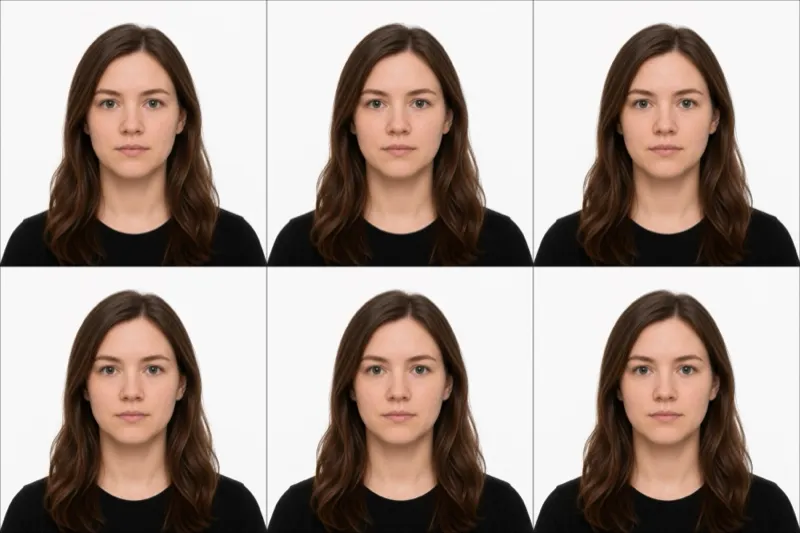
Inside Canada, the catch with chain pharmacies is that their default is the 50×70 mm Canadian passport size — ask explicitly for 35×45 mm, or IRCC will refuse the print. Outside Canada, any studio that shoots Schengen or UK visas can do 35×45 mm; just specify dimensions and the 31–36 mm head height. Online is cheapest and fastest either way, and gives you both the digital JPEG and a print-ready sheet for any photo lab.
Submitting your photo
A TRV photo reaches IRCC one of two ways: uploaded through your IRCC secure account, or handed in as prints with a paper application or at a Visa Application Centre.
Online portal (IRCC secure account) — Most TRV, study permit, and work permit applications go through the portal. You upload a JPEG at least 35×45 mm at 300 dpi, under 4 MB. The portal does not run an automated photo check, so a non-compliant photo uploads fine and gets refused later by the visa officer.
Paper application or Visa Application Centre (VAC) — Submit two identical 35×45 mm prints on photo-quality paper. The back of one print must carry the photographer’s or studio name, address, and the date the photo was taken. Photos without these details are routinely refused at VACs — including home prints.
Babies, kids & special situations
Infants and young children follow the same 35×45 mm spec with two allowances: a newborn’s eyes do not have to be fully open, and no one else may appear in the frame. Lay the baby on a plain white sheet and shoot from directly above; any hand supporting the head must not be visible in the cropped photo. The face must still fill the 31–36 mm head-height window — common cause of rejection for newborns is a head that’s too small in the frame.
Religious head coverings are accepted when worn daily for religious reasons. The face must be visible from the bottom of the chin to the top of the forehead and from ear to ear; no shadow from the covering on the face.
Medical or accessibility devices worn daily — hearing aids, oxygen tubes, post-surgical eyewear with a signed letter — are accepted.
Prescription glasses are accepted for the TRV (unlike the Canadian passport). The eyes must still be clearly visible, no glare on the lenses, no tint or transitions, and the frames must not cover any part of the eyes.
Ready to skip the studio?
Upload a selfie and get a compliant photo in 2 minutes.
Sources & References
This guide is fact-checked against official government publications and updated regularly to reflect the latest requirements.
- [1]