The official requirements
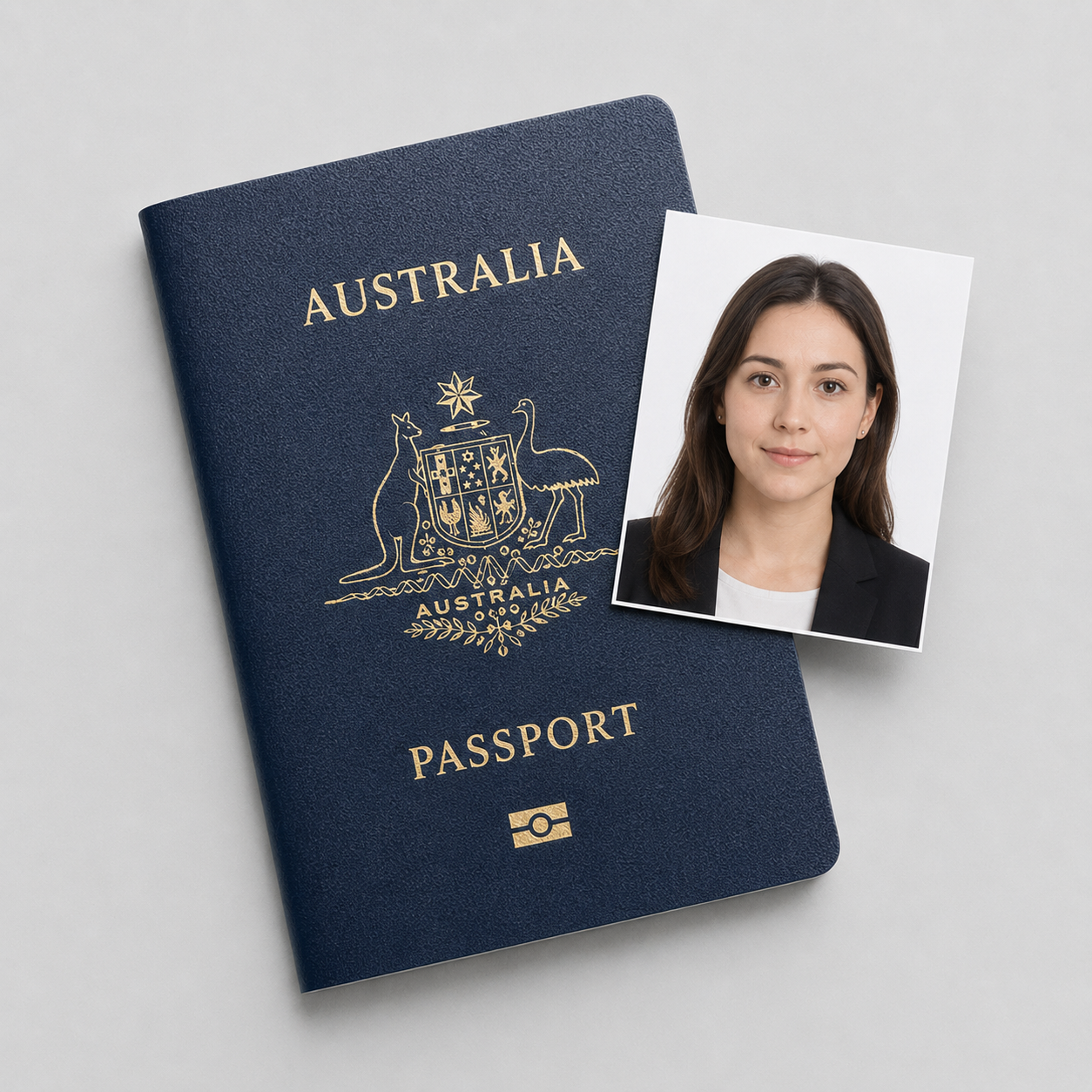
The Department of Home Affairs sets the rules for visa application photos. The spec is similar to an Australian passport photo, but visa applications run through ImmiAccount — most applicants upload a digital file rather than lodge prints. Miss any one of these and the photo is rejected:
- Size: 35 mm wide × 45 mm tall
- Background: plain white or light grey, no patterns or shadows
- Head size: 32–36 mm from chin to crown (71–80% of the photo height)
- Expression: neutral, eyes open, mouth closed, looking straight at the camera
- Glasses: not allowed unless medically necessary, and no reflections
- Recency: taken within the last 6 months and a true likeness of you today
- Color: colour photo only — black and white is rejected
For an ImmiAccount upload, the digital file must be a JPEG, at least 420×540 pixels and no larger than 1200×1600 pixels, with a file size up to 10 MB. Two identical prints are required only if the visa stream still asks for paper lodgement.
How to take a compliant photo
A modern phone camera is fine. Visa photos fail on framing, background and lighting far more often than on camera quality. The setup that works:
- Stand 1.5–2 metres in front of a plain white or light grey wall, with the same distance between you and the wall to avoid casting a shadow.
- Light yourself evenly from the front — face a window. Skip overhead lighting, which throws shadows under the eyes and nose.
- Have someone else take the shot. Selfies distort facial proportions and almost always frame the head wrong for the 35×45 mm crop.
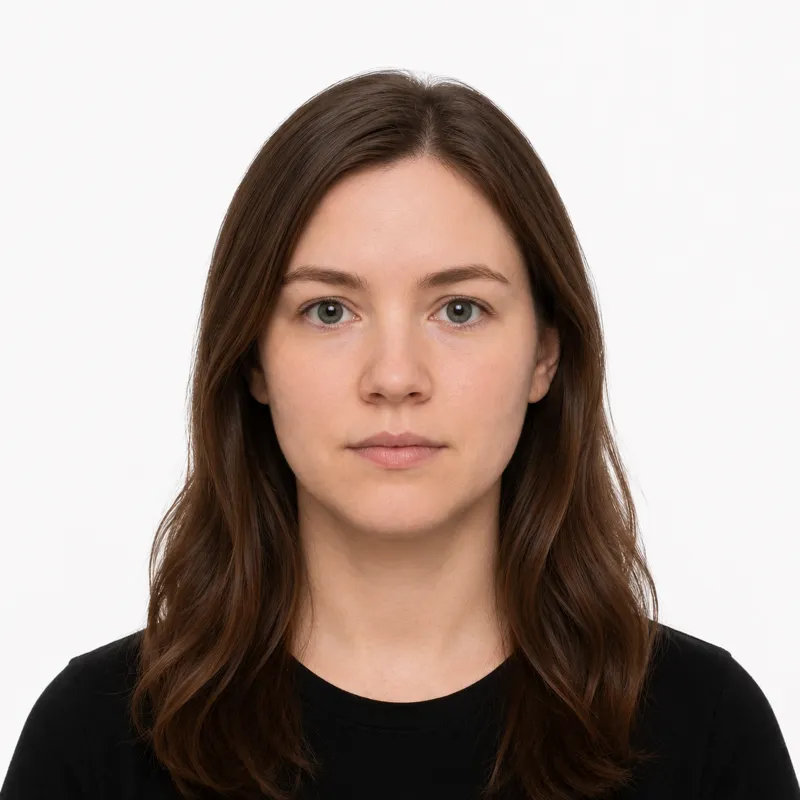
- Look straight at the camera, neutral expression, mouth closed, both eyes visible. Hair clear of the eyes and ears.
- Crop to 35×45 mm with the head filling 71–80% of the frame, then export as a JPEG between 420×540 and 1200×1600 pixels. Tools that crop and validate against the Home Affairs spec do this in one pass.
Why photos get rejected
Visa officers and the ImmiAccount upload check bounce a predictable set of problems. Each one, and the fix:
- Glasses left on — even prescription glasses. Remove them unless you have a medical reason, and watch for reflections on the lenses.
- Wrong head size — must be 32–36 mm chin to crown, roughly 71–80% of the photo height. Re-shoot from the right distance, or re-crop.
- Background off-spec — cream walls, textured walls, gradients and visible seams all fail. Plain white or light grey only, no shadows behind the head.
- Wrong dimensions — must be 35×45 mm. A 2×2 inch crop from a US passport photo or a 33×48 mm China visa crop will be rejected.
- Shadows on the face — usually caused by overhead light or standing too close to the wall. Move forward and light from the front.
- Black-and-white photo — Home Affairs only accepts colour. A monochrome filter or scan fails.
- Photo older than 6 months — must reflect your current appearance. A photo lifted from an old passport application will not pass.
What to wear (and not wear)
Glasses are the trap here: many applicants assume prescription glasses are fine, but Home Affairs treats them as an automatic rejection unless you have a documented medical reason.
Avoid: glasses of any kind, hats or caps, headphones or earbuds, uniforms or anything that obscures the face or hairline. A white or very pale top can also blend into a white background — wear a darker, solid colour instead.
Fine: normal everyday clothing, light makeup that doesn’t change your everyday look, religious head coverings worn daily (the face must be fully visible from forehead to chin and both edges of the face), and medical devices like hearing aids worn every day.
Where to get your photo
Because the visa is uploaded online, the digital file matters more than a print. Prices and trade-offs:
| Where | Price (AUD) | Digital file | Speed | Acceptance guarantee |
|---|---|---|---|---|
| Australia Post | ~$19.95 | On request | Same day | Yes |
| Officeworks | ~$16.95 | Sometimes | Same day | Yes |
| Local pharmacy / chemist | ~$15–20 | Rarely | Same day | Varies |
| Photo studio | ~$25–35 | Yes | Same day | Yes |
| Online tool (this site) | $1.00 | Yes — JPEG to spec | ~2 minutes | Money-back if rejected |
In-store providers are aimed at the passport market, where a physical print is mandatory; for an ImmiAccount upload, ask explicitly for the digital file, not just two prints. Photo studios are the most likely to hand over a JPEG without being prompted. An online tool that exports a JPEG sized to the Home Affairs spec is the cheapest path if you already have a usable shot — but the only thing that matters is that the photo meets every rule above.
Submitting your photo
Most Australian visa subclasses — visitor 600, ETA 601, student 500, work 482/186, partner 309/820 — are lodged through ImmiAccount, the Home Affairs online portal. The photo path:
Online (ImmiAccount) — You attach the photo as a JPEG when uploading supporting documents to your application. The file must be 420×540 to 1200×1600 pixels and up to 10 MB. There is no separate “photo upload” form; the photo is attached alongside your identity documents. If the photo is rejected, a case officer requests a replacement upload and the application is held until you provide one.
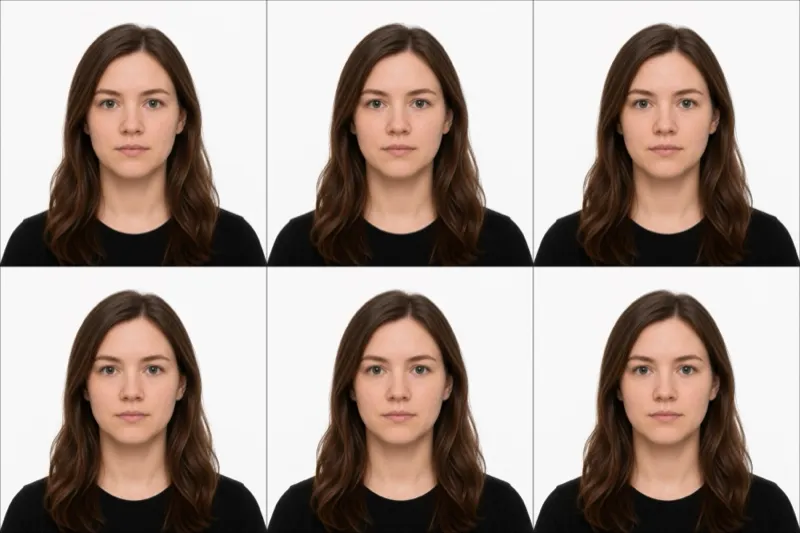
Paper applications — A small number of subclasses still allow paper lodgement at an overseas Australian mission. Those require two identical 35×45 mm printed photos attached to the application form. Check your specific subclass on the Home Affairs site before printing — the default in 2026 is online.
There is no in-person photo check at lodgement, the way an Australia Post passport interview works. Your photo is reviewed by the case officer after upload, so get it right before you submit.
Children and special situations
Infants and young children follow the same 35×45 mm rules as adults — plain background, no toys, no dummies, no hands or arms in the frame. For newborns, lay the baby on a plain white or light grey sheet and shoot from directly above; a parent’s hand supporting the head is allowed only if it is not visible in the final crop. Children under 3 are not required to have a neutral, closed-mouth expression.
Religious head coverings worn daily are permitted, but the full face — from the bottom of the chin to the top of the forehead, and both edges of the face — must be clearly visible.
Glasses are not permitted, even prescription. If you have a documented medical reason (recovering from eye surgery, for example) you may keep them on, but the lenses must be clear and free of reflections.
Medical devices such as hearing aids or oxygen tubes worn every day are fine and should be visible as you normally wear them.
Ready to skip the studio?
Upload a selfie and get a compliant photo in 2 minutes.
Sources & References
This guide is fact-checked against official government publications and updated regularly to reflect the latest requirements.
- [1] Department of Home Affairs — Attach documents to your applicationimmi.homeaffairs.gov.au