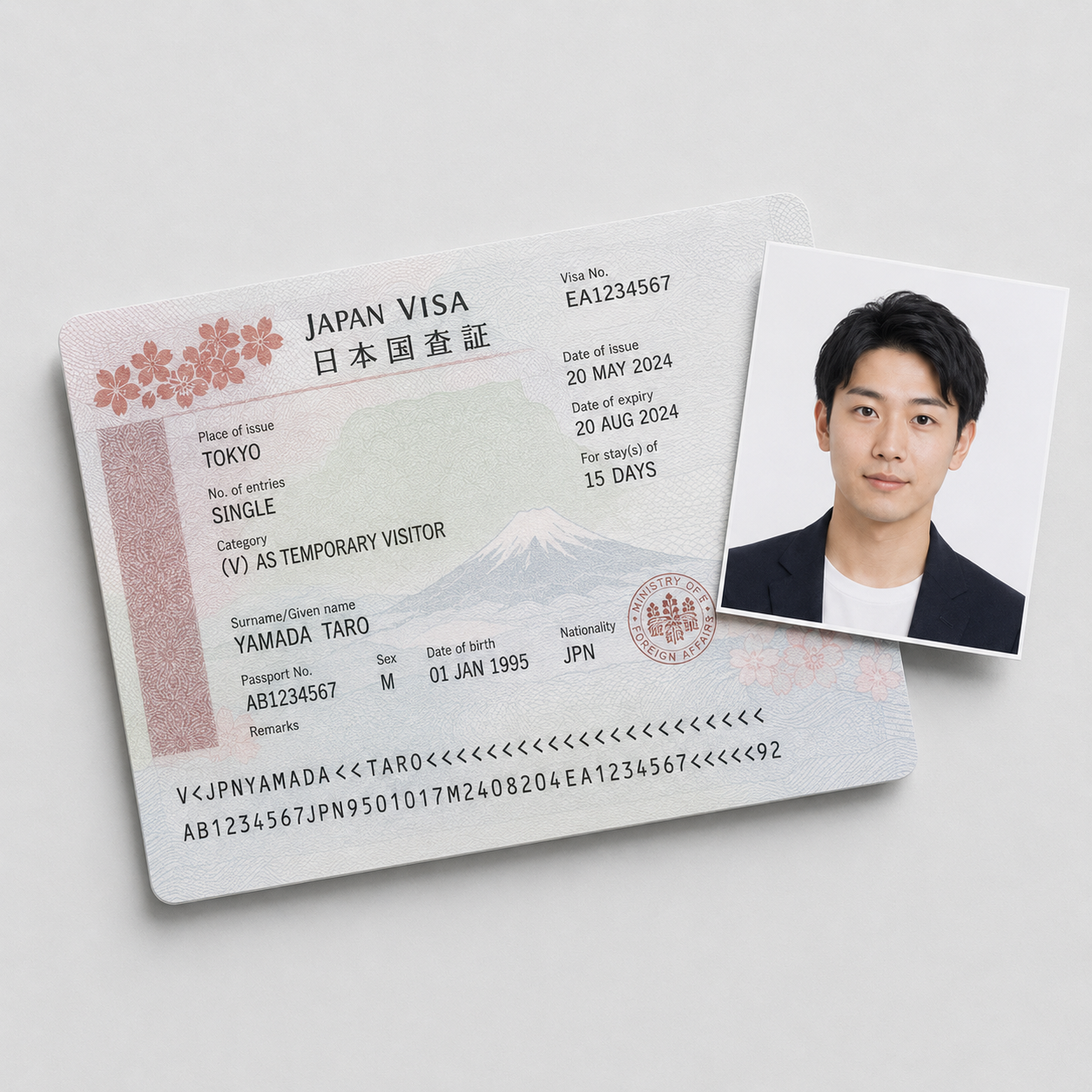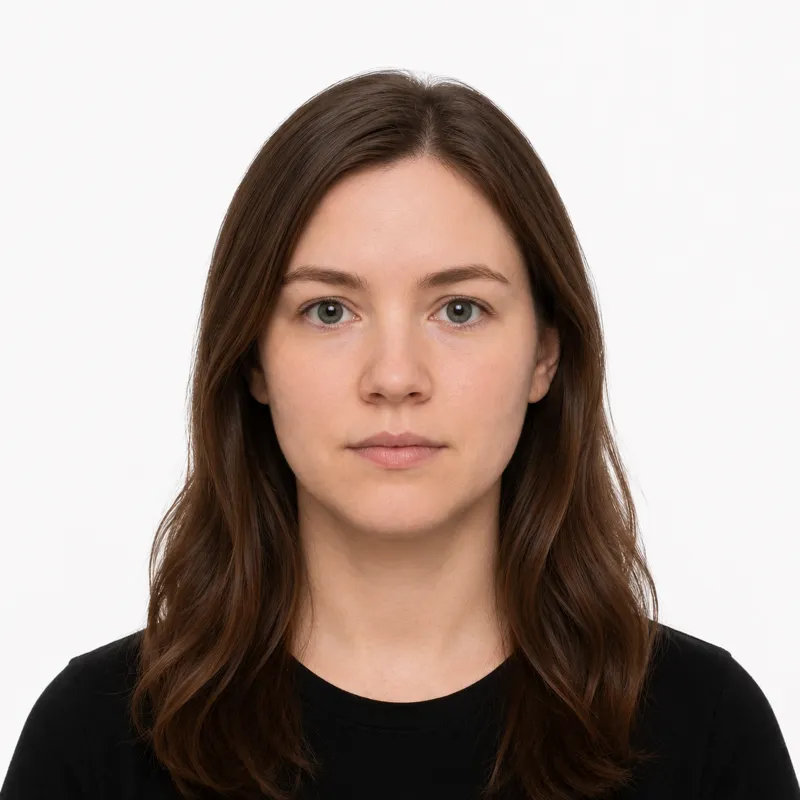
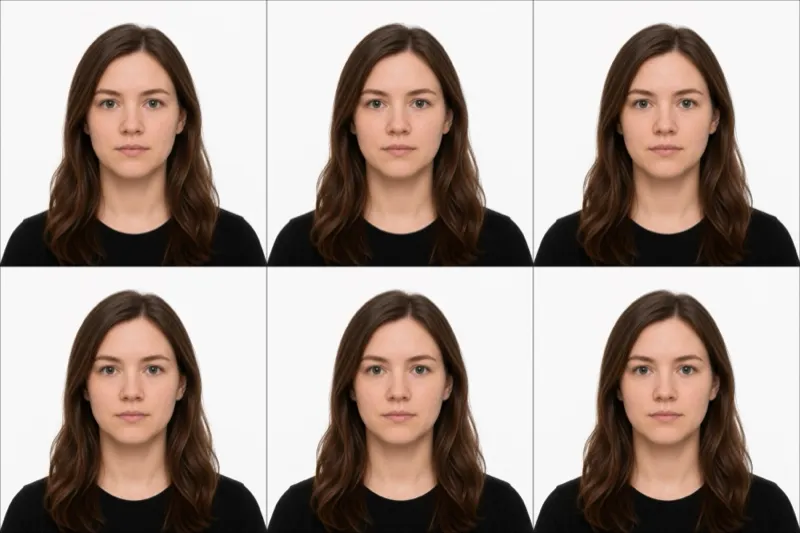
The official requirements
Japan permits glasses but returns more photos for lens glare than for any other glasses problem, so the spec below is only half the battle. The Ministry of Foreign Affairs standard:
- Size: 35×45 mm (width × height), portrait
- Background: plain white or off-white, no patterns or textures
- Head size: 32–36 mm from chin to crown
- Expression: neutral, mouth closed, both eyes open
- Glasses: allowed, but the lenses must show no glare or reflection and must not hide the eyes
- Recency: taken within the last 6 months
- Color: color photo only — black and white is not accepted
For a digital application, the file must be a JPEG, 827×1062 pixels, and no larger than 1 MB.
How to take a compliant photo
Japan’s 32–36 mm head-height window is narrow, so framing matters more than camera quality. The setup that works:
- Stand 4–6 feet from a plain white or pale wall, far enough that no shadow falls behind you.
- Light yourself evenly from the front — face a window. Side or overhead light leaves shadows.
- Have someone else take it from chest height, straight on. A selfie distorts proportions.
- Look straight at the camera, neutral expression, hair away from your eyes and eyebrows.
- Crop to 35×45 mm with the head at 32–36 mm chin to crown — or upload the shot to a tool that measures and crops to the Japanese spec.
Why photos get rejected
Passport counters return the same problems again and again. Each one, and the fix:
- Wrong size — submitting the US 2×2 inch format. It must be 35×45 mm.
- Head outside the 32–36 mm window — too large or too small. Re-crop, or re-shoot from the right distance.
- Glare on glasses — reflections that hide the eyes get the photo bounced. Tilt the head slightly, or remove the glasses.
- Background not white — a patterned or shadowed wall reads as off-spec. Use a plain white wall.
- Black and white photo — only color is accepted.
- Photo older than 6 months — it must reflect your current appearance.
What to wear (and not wear)
Japan allows glasses, so the real wardrobe risk is a pale top against the off-white background that softens your outline. Choose a darker, solid color.
Avoid: hats or caps, anything covering the hairline or face, accessories that cast a shadow, and a white or pale top against the background.
Fine: ordinary everyday clothing, light makeup that keeps your everyday appearance, glasses (provided the lenses are glare-free and the eyes stay visible), religious head coverings worn daily with the face fully visible.
Glasses are allowed in Japan, but glare is the most common glasses-related rejection. If your lenses reflect even slightly, it is safer to take them off.
Where to get your photo
The speed photo booth in stations and stores is the dominant channel. Common options and trade-offs:
| Where | Price (JPY) | Appointment | Speed | Digital file |
|---|---|---|---|---|
| Speed photo booth (証明写真機) | ~900 (700–1,000) | No | A few minutes | Some booths only |
| Convenience-store app print (7-Eleven / Lawson / FamilyMart) | ~250 | No | Same day | Yes (you supply it) |
| Photo studio (写真館) | ~4,000 (3,000–5,000+) | Sometimes | Same day | Usually |
| Online tool (this site) | ~$1 | No | ~2 minutes | Yes |
A booth is fast and everywhere; a studio costs more but checks the framing for you. Online is cheapest and gives you a JPEG plus a print-ready file you can run through a konbini printer. Whichever you pick, the photo only counts if it meets every rule above.
Submitting your photo
Japan asks for a single print at the counter, with an online route opening up where it is available.
In-person application — You bring one printed 35×45 mm photo to the passport counter; it is checked against the standard at the desk.
Digital application — Where online application is available, you upload a JPEG (827×1062 px, under 1 MB). Shoot with the digital file in mind so a wrong head size isn’t caught only at upload.
Babies, kids & special situations
Infants and toddlers follow the same rules — plain white background, no toys, hands, or arms in the frame, both eyes open. Lay the baby on a white sheet and shoot from directly above.
Religious head coverings are allowed when worn daily for religious reasons; the face must stay fully visible from forehead to chin.
Glasses are allowed but must be glare-free with the eyes clearly visible. If your lenses reflect, take them off for the photo.
Ready to skip the studio?
Upload a selfie and get a compliant photo in 2 minutes.
Sources & References
This guide is fact-checked against official government publications and updated regularly to reflect the latest requirements.
- [1]