The official requirements
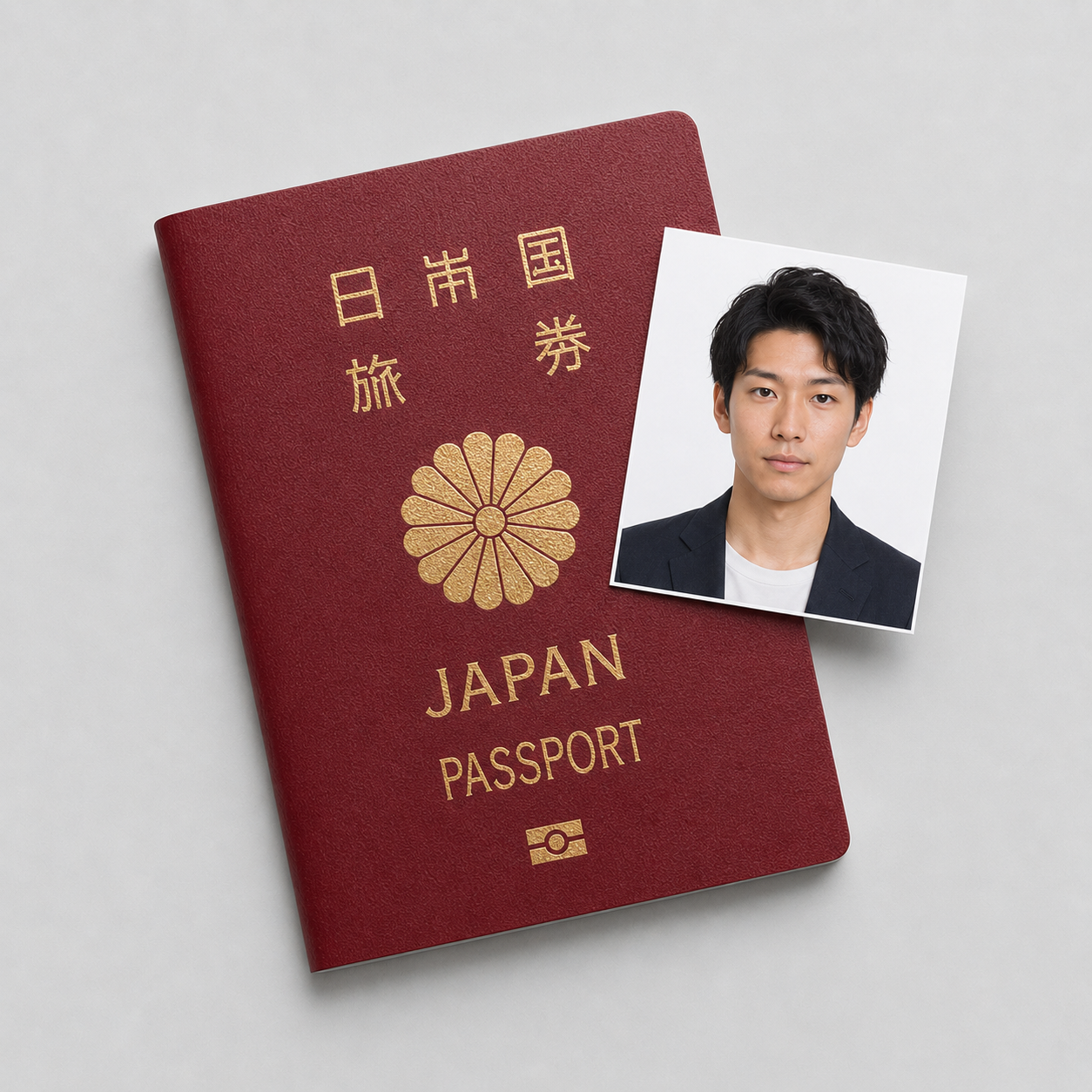
The Japan visa photo is most commonly 45×45mm — square — but this is the one document where the size genuinely depends on where you apply. Some Japanese embassies and consulates use 35×45mm or 2×2 inch instead. Confirm with your specific consulate before you do anything else. Assuming 45×45 mm, the spec is:
- Size: 45×45 mm, square (verify with your consulate)
- Background: plain white only — no patterns, shadows, or other colors
- Head size: head roughly 27 mm tall, with about 7.5 mm of space above the head
- Expression: neutral, mouth closed, eyes open, looking at the camera
- Glasses: allowed, provided the eyes are clearly visible with no glare or reflection
- Recency: taken within the last 6 months
- Color: color photo
For a digital file, a JPEG up to 120 KB is expected; ICAO biometric standards apply.
How to take a compliant photo
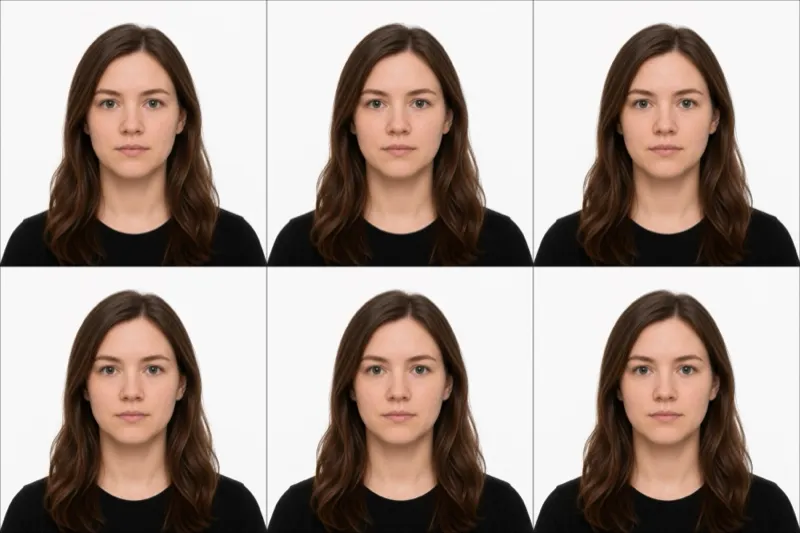
Standard portrait setup — the square crop and the head spacing are what to watch:
- Stand 6–8 feet in front of a plain white wall, far enough out to cast no shadow.
- Light yourself evenly from the front. Japan’s guidance is strict: only plain white, no shadows at all.
- Have someone else take the shot — neutral expression, mouth closed, eyes on the lens.
- Crop to the square 45×45 mm frame, leaving about 7.5 mm of space above the head. A standard 35×45 mm portrait crop is the wrong shape.
- Avoid flash that causes red-eye — use natural light. Then export a JPEG under 120 KB, or use a tool that crops to the Japan visa frame and exports a compliant file.
Why photos get rejected
Japanese consulates reject a consistent set of problems. Each one, and the fix:
- Wrong size — the size varies by consulate; a 45×45 mm photo sent to a consulate that wants 2×2 inch is rejected. Confirm first.
- Background not plain white — any pattern, color, or shadow fails. Japan is strict here.
- Shadows on face or background — light evenly from the front.
- Glasses glare — glasses are allowed, but reflection or glare hiding the eyes is a rejection. Tilt the head slightly or remove them.
- Red-eye from flash — use natural light instead of a flash.
- Photo too old — must be within the last 6 months.
What to wear (and not wear)
There is no dress code, but a few choices reliably cause a rejection.
Avoid: hats and non-religious head coverings, headphones, and a white or very pale top that blends into the white background.
Fine: ordinary everyday clothing in a solid darker color, light everyday makeup, religious head coverings worn daily, and prescription glasses — as long as the lenses produce no glare and the eyes stay clearly visible.
Glasses being permitted is the contrast with a US visa photo; the constraint is glare, not the glasses themselves.
Where to get your photo
You can get a Japan visa photo online or in person. The size caveat affects which you choose:
| Where | Price | Handles variable sizing | Digital file | Speed |
|---|---|---|---|---|
| Speed photo booth (証明写真機) | ~¥900 | Fixed presets — may not match your consulate | Some booths | ~5 minutes |
| Photo studio (写真館) | ~¥4,000 | Yes — tell them your consulate’s size | Often | Same day |
| Convenience-store app print | ~¥250 | Depends on the app’s crop | App-dependent | ~10 minutes |
| Online tool (this site) | $1.00 | Yes — crop to any required size | Yes | ~2 minutes |
A station photo booth is cheap and fast but uses fixed size presets, which may not match what your consulate asks for. A studio will crop to whatever size you specify if you tell them. An online tool lets you set the exact size your consulate requires and gives you the digital file. Whichever you use, confirm your consulate’s size requirement first.
Submitting your photo
Japan visa applications are filed at a Japanese embassy or consulate, or through an accredited travel agency.
Paper application — You attach one printed photo, at the size your consulate specifies, to the visa application form. Glossy photo paper is expected.
Through an agency or online step — Where a digital photo is requested, upload the JPEG (under 120 KB). Because the size requirement varies, the safest approach is always to confirm it with your specific consulate before printing or uploading.
Ready to skip the studio?
Upload a selfie and get a compliant photo in 2 minutes.
Sources & References
This guide is fact-checked against official government publications and updated regularly to reflect the latest requirements.
- [1] Ministry of Foreign Affairs of Japan — Visamofa.go.jp