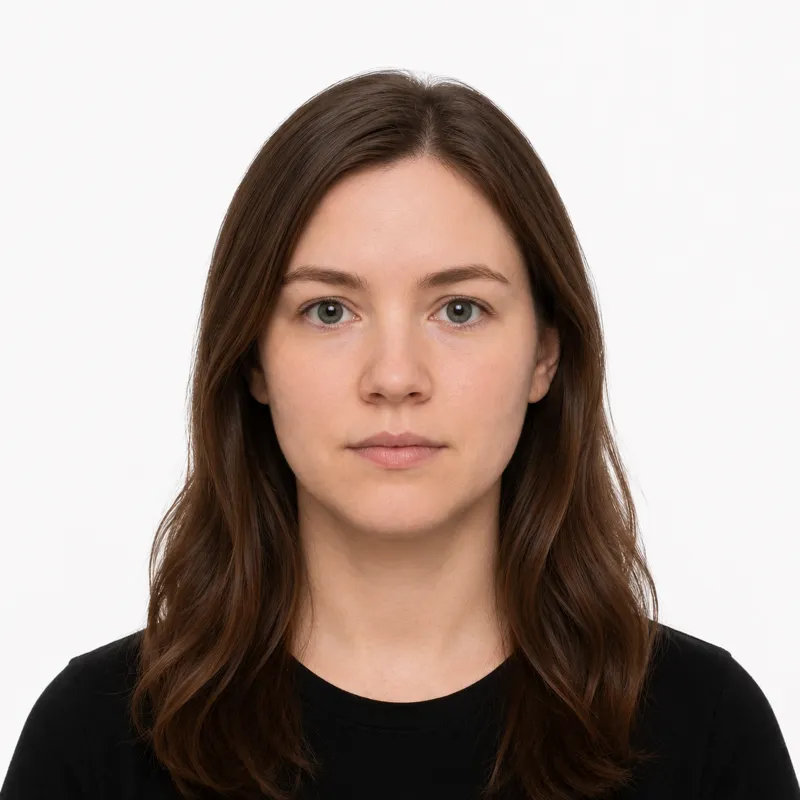
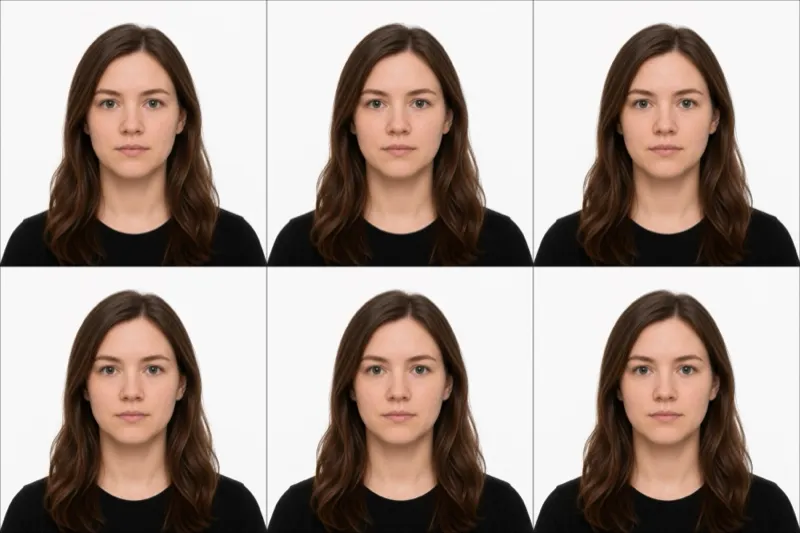
The Italian passport is not an upload-and-forget process. You book an appointment first, then turn up in person with photos you have already printed. Inside Italy that appointment is at the Questura (the Polizia di Stato police headquarters), booked through the Agenda Passaporto system or the Passaporto Online service run via Poste Italiane. If you live abroad, you apply at your local Italian consulate instead, which serves the large Italian diaspora. Either way the photo is something you supply: the counter does not photograph you, you bring physical prints, typically two identical photos, and they become part of your file. So the practical question is not “will they take a good photo of me” but “have I produced a print that meets the 35x45mm biometric spec before I arrive.”
The official requirements
Italy is specific where many countries aren’t: the print must be on matte paper, not glossy, and all eyewear comes off before the shot. Those two catch people out alongside the rest of the EU biometric spec:
- Size: 35x45 mm (the standard EU biometric format)
- Background: plain white, with uniform lighting and no shadows
- Head size: the face fills 70 to 80 percent of the frame, roughly 32 to 36 mm from chin to crown
- Eyes: positioned in the upper half of the frame, looking straight at the camera, both open
- Expression: neutral, mouth closed
- Glasses: not accepted for the Italian passport photo. Remove all eyewear before the shot.
- Recency: taken within the last 6 months
- Color: color photo, not black and white
- Paper: high quality matte photo paper, not glossy
How to take a compliant photo
A current phone camera is sharp enough for this. Italian passport photos fail on framing, background, and lighting far more often than on camera quality, so the setup matters more than the gear.
Stand in front of a plain white wall with a gap of a metre or two between you and it, enough that you do not throw a shadow onto the wall behind your head. Face a window so the light falls evenly on your face from the front. Overhead lighting is the usual culprit for dark sockets under the eyes, so avoid shooting under a ceiling lamp. Have someone else hold the camera at your eye level rather than taking a selfie, which distorts the proportions of your face and tends to frame the head badly.
Look straight down the lens with a neutral expression and your mouth closed, both eyes open and your hair clear of your face. Then crop to the 35x45 mm shape with your head filling 70 to 80 percent of the frame. That head-size ratio is where most home attempts drift off-spec, so check it deliberately, or run the shot through a tool that crops and measures it against the Italian spec for you. When you print, use matte photo paper, and produce two identical copies so you have both to hand at the appointment.
Why photos get rejected
The same handful of problems account for most rejections at the Questura or consulate counter. Each one, with the fix:
- Glasses left on. Eyewear is not accepted for the Italian passport photo. Take glasses off before you shoot, prescription pairs included.
- Head wrong size. It must fill 70 to 80 percent of the frame, about 32 to 36 mm chin to crown. Re-shoot from a different distance, or re-crop.
- Background not truly white. A cream, grey, or patterned wall reads as off-spec. Use a plain white wall or replace the background.
- Shadows. On the face or on the wall behind you. Step away from the wall and light yourself evenly from the front.
- Mouth open or smiling with teeth. Keep a neutral expression with the mouth closed.
- Glossy paper. The spec calls for matte, high definition paper. A glossy print can be bounced.
- Photo too old. It must reflect your current appearance, so taken within the last 6 months.
What to wear (and not wear)
The accessory that catches most people out for the Italian photo is glasses: applicants assume corrective lenses are fine, but Italy takes the photo without any eyewear, so plan to remove them.
Avoid: glasses of any kind, hats or caps, anything that casts a shadow across the face, and uniforms. A white or very pale top can blend into the white background and blur the edge of your shoulders, so a darker solid colour reads more cleanly.
Fine: ordinary everyday clothing in a solid colour, light makeup that does not change how you normally look, and religious head coverings worn daily, provided the full face stays visible from forehead to chin and the eyes are clear.
Where to get your photo
Because Italy needs you to arrive with finished prints, the real choice is who produces them. Here is a fair comparison:
| Where | Typical price | Output | Notes |
|---|---|---|---|
| Italian photo studio (fototessera) | €8 to €15 | Two matte prints in hand | Staff know the 35x45mm biometric format |
| Poste / photo booth | €5 to €10 | Strip of prints on the spot | Convenient, but check the booth is set to passport mode |
| Studio near the consulate (if abroad) | Varies by country | Prints sized to spec | Useful if you are applying through a consulate |
| Online tool (this site) | $1 | Digital file plus a print-ready sheet | Crops to 35x45mm and checks head size, then you print on matte paper, about 2 minutes |
A walk-in fototessera studio is the simplest path if you want someone else to handle the framing and printing, and the staff generally know the format by heart. A booth or Poste counter is cheaper and fast but gives you less control, so confirm it is set to the passport size before you pay. If you would rather start from a photo you already have, an online tool can crop and validate it against the Italian spec and hand you a sheet to print at home or at a print shop. Whichever route you take, the only thing that decides acceptance is whether the print meets every rule above.
Submitting your photo
You submit the printed photos in person, and the channel depends on where you live.
Questura in Italy. Book the appointment first through the Agenda Passaporto system, or use the Passaporto Online service via Poste Italiane to schedule it. Then attend the Questura in person and hand over your prints, typically two identical 35x45 mm photos on matte paper with a white background. The booking system handles only the appointment; the photos are still physical.
Consulate abroad. Italians living overseas apply at their local Italian consulate, which serves the diaspora. The photo spec is the same 35x45 mm biometric format. Quantity can vary by post, so check your consulate’s page, but supplying two identical prints is the safe default that matches the in-Italy norm.
In both cases the prints are something you prepare beforehand, so the work is done before you ever reach the counter. Arrive with two clean, in-spec photos and the photo step takes seconds.
Ready to skip the studio?
Upload a selfie and get a compliant photo in 2 minutes.
Sources & References
This guide is fact-checked against official government publications and updated regularly to reflect the latest requirements.
- [1] Consolato Generale d'Italia Houston — ICAO photo guidelinesconshouston.esteri.it