The official requirements
Spain is the outlier. Most of Europe shoots passport photos at 35×45 mm, but Spain’s format is 26 mm wide by 32 mm tall, set by the Dirección General de la Policía. A strip of photos taken at a German, French, or UK booth is physically the wrong size for a Spanish passport, and the comisaría will turn it away. That single difference is what catches people who reuse an old photo or print to the European default.
The full spec:
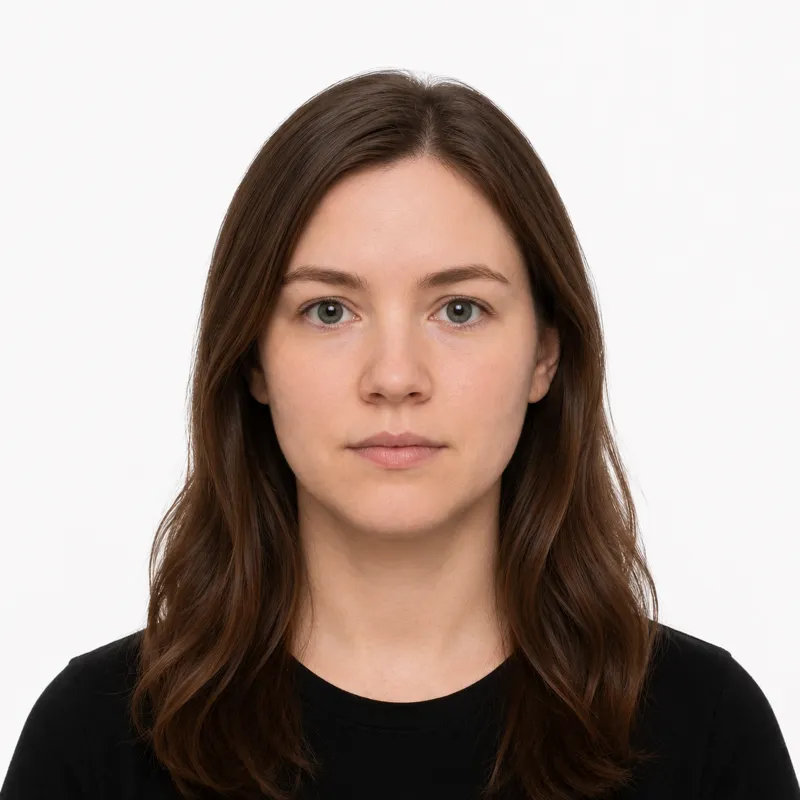
- Size: 26×32 mm, portrait
- Background: plain white, uniform, no shadows or visible objects behind you
- Head size: the face fills 70–80% of the frame, shown front-on
- Expression: neutral, mouth closed, head straight, eyes open and looking at the camera
- Accessories: nothing that hides facial features; the full oval of the face (eyebrows, eyes, nose, mouth, chin) must be visible
- Head covering: none, except for documented religious reasons with the face fully visible
- Quality: recent colour photograph on quality photographic paper
The same 26×32 mm photo is used for the Spanish DNI (national ID card), so one compliant shot covers both documents if you are renewing them together.
How to take a compliant photo
The small format does not change how you shoot, only how you crop. Work to the 70–80% head ratio and the size sorts itself out:
- Stand about 1.5 metres in front of a plain white wall, far enough out that you cast no shadow on it.
- Light your face evenly from the front. A window works; overhead light drops shadows under the eyes and the nose.
- Have someone else take the photo straight on at eye level. An arm’s-length selfie distorts the face and almost always misframes the head.
- Keep a neutral expression, mouth closed, head straight, both eyes open, hair off the face.
- Crop to 26×32 mm with the face at 70–80% of the height. Cropping to the European 35×45 mm and trimming later does not work; the proportions differ, so set the Spanish size from the start or use a tool that crops to it directly.
Why photos get rejected
The comisaría checks the photo when you apply, so a wrong one costs you the appointment. The repeat offenders:
- Wrong size. The Spain-specific trap: a 35×45 mm European photo or a US 2×2 inch print is simply the wrong format. Shoot or crop to 26×32 mm.
- Background not plain white. Cream or grey walls, gradients, or anything visible behind you. Use a white wall or replace the background.
- Face partly hidden. Hair across the eyebrows, a fringe over the eyes, or accessories covering the face. The whole face oval must show.
- Dark or tinted glasses. Not allowed. Clear prescription lenses may pass if there is no glare, but tinted lenses fail.
- Non-neutral expression. Smiling, raised eyebrows, or a tilted head. Stay straight and neutral.
- Low quality. Blur, poor lighting, or a photo printed on plain paper rather than photographic paper.
What to wear (and not wear)
There is no dress code, but the white background sets a practical one: a white or very pale top blends into it and softens the outline of your shoulders, so wear a solid mid-tone or dark colour. Avoid hats, caps, and tinted glasses. Head coverings are allowed only for documented religious reasons, and the face must stay fully visible. Everyday light makeup is fine as long as it does not change how your features read.
Where to get your photo
In Spain the practical options are a street photo booth, a photo shop, or a digital file you bring or print:
| Where | Price | Speed | Output |
|---|---|---|---|
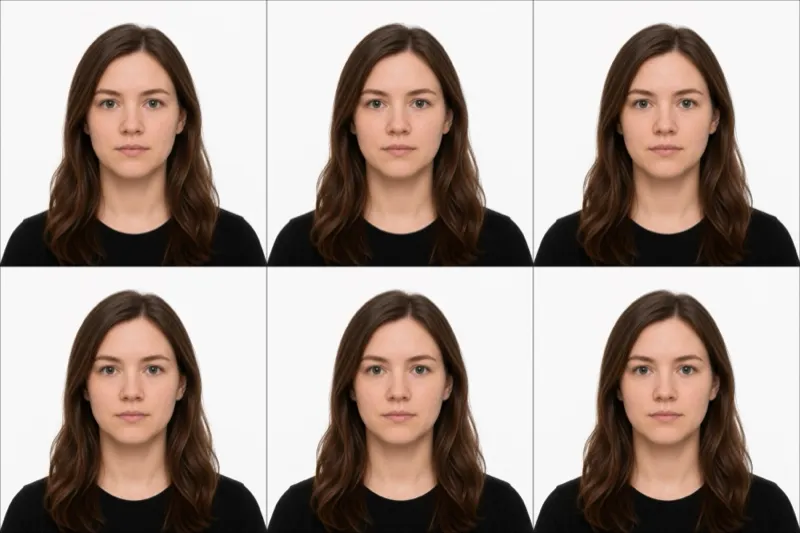
| Fotomatón (street/metro photo booth) | €5–€8 | A few minutes | Strip of prints at the Spanish size |
| Tienda de fotografía (photo shop) | €6–€12 | Same day | Prints, often a digital copy too |
| Online tool (this site) | $1 | ~2 minutes | A 26×32 mm digital file plus a print-ready sheet |
A photo shop is the safe choice if you want someone to set the framing and the 26×32 mm size for you. The booth is the cheap, fast default and prints to the Spanish format automatically. A digital tool fits if you would rather shoot at home and print at a shop or kiosk, as long as it crops to 26×32 mm and not the European size. Whichever you pick, the photo only counts if it meets every rule above.
Submitting your photo
A Spanish passport is issued in person at a Policía Nacional office (comisaría) that handles documentation, by appointment (cita previa) booked online or by phone.
You bring one recent photo meeting the 26×32 mm spec to the appointment, where your fingerprints and signature are also captured. Some offices photograph applicants on site, but availability is not guaranteed, so bringing a compliant print is the reliable route. The passport fee is paid at the office or in advance.
Renewals follow the same channel: cita previa, then an in-person appointment with one photo. The photo rules do not change for a renewal.
Babies, kids & special situations
Infants and young children follow the same 26×32 mm spec: plain white background, face front-on, eyes open, mouth closed, nothing and no one else in the frame. For a baby who cannot sit, lay them on a plain white sheet and shoot from directly above. Minors apply with a parent or guardian present.
Religious head coverings are accepted only with documented religious grounds, and the full face must remain visible from chin to forehead.
Glasses are best removed. Clear lenses can pass without glare, but tinted lenses are rejected, and a reflection is enough to fail an otherwise good photo.
Ready to skip the studio?
Upload a selfie and get a compliant photo in 2 minutes.
Sources & References
This guide is fact-checked against official government publications and updated regularly to reflect the latest requirements.
- [1]
- [2]