How to Take a Good Driver's License Photo: Tips & Rules by State
Get a driver's license photo you won't hate. Tips for looking good plus DMV photo rules by state.
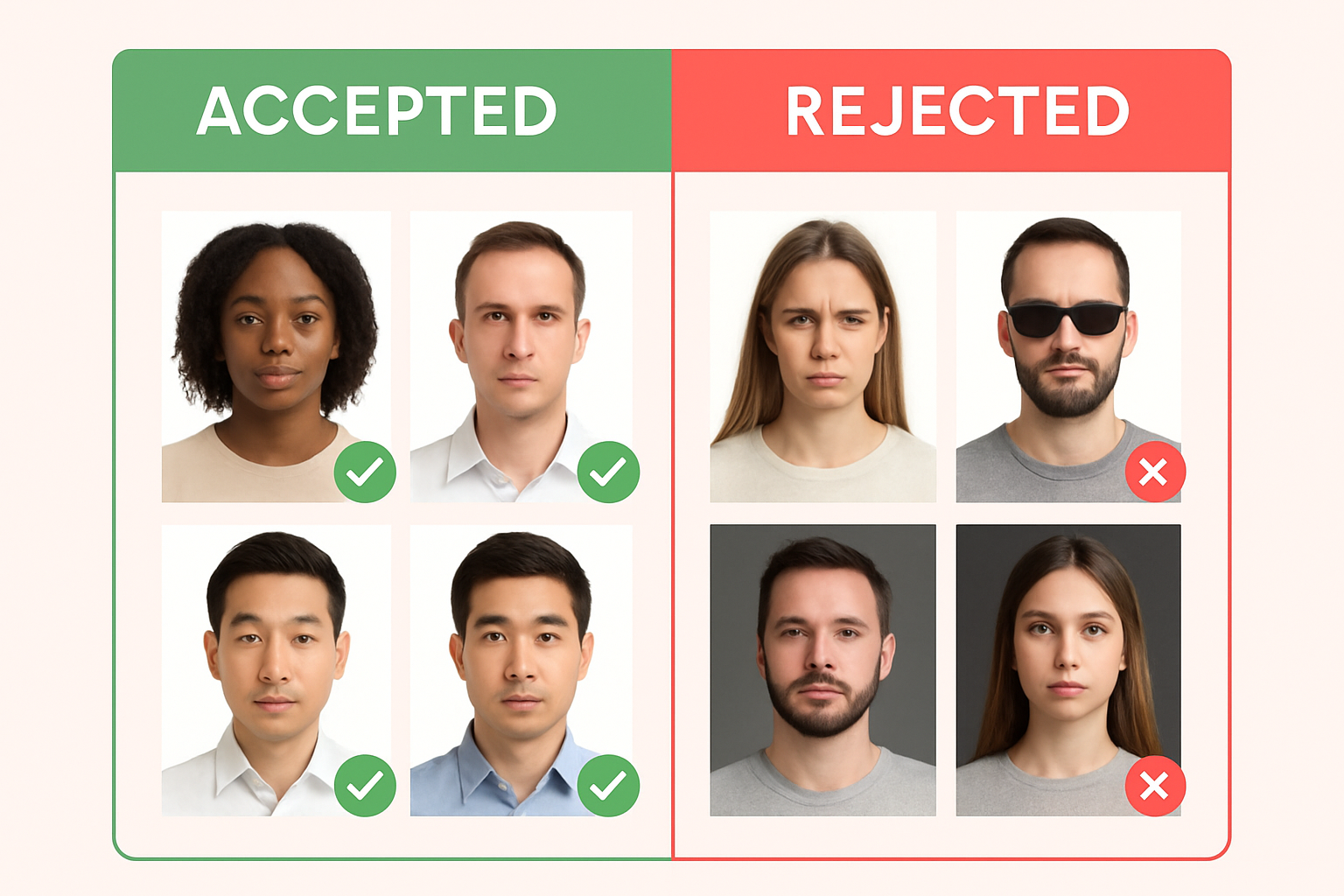
Your driver’s license photo will follow you for 4-8 years depending on your state. That’s thousands of times you’ll pull it out at bars, airports, and pharmacies. Thousands of times someone will glance at it and form an impression. Yet most people walk into the DMV completely unprepared, end up with a photo that makes them look like a tired criminal, and live with that regret until their next renewal.
It doesn’t have to be this way.
With a little preparation—and knowing the specific rules your state enforces—you can walk out of the DMV with a photo you’re actually proud to show. Here’s everything you need to know.
Why Your License Photo Usually Looks Bad
Before we fix the problem, let’s understand why DMV photos are notoriously terrible:
Harsh overhead lighting. DMV offices use fluorescent lights that cast unflattering shadows under your eyes and nose. This lighting emphasizes bags, wrinkles, and skin texture.
No time to prepare. You wait in line for an hour, finally reach the counter, and suddenly you’re told to look at the camera. No warning, no mirror check, just flash—done.
The neutral expression requirement. Most states require a “neutral expression,” which people interpret as completely deadpan. The result? Everyone looks like they’re being processed for arrest.
You can’t see the result. Unlike your phone camera, there’s no preview. What you get is what you’re stuck with.
The good news? You can work around every single one of these factors.
What to Wear for Your DMV Photo
Your clothing choice matters more than you think. Here’s what works:
Colors That Photograph Well
Solid, saturated colors look best against the standard blue or gray DMV backdrop. Think:
- Deep jewel tones (emerald, sapphire, burgundy)
- Rich earth tones (rust, olive, chocolate brown)
- Classic black or navy
Avoid:
- White or very light colors (they’ll wash you out and blend into lighter backgrounds)
- Busy patterns, stripes, or logos (distracting and can cause visual issues)
- Neon colors (they can reflect onto your face)
- Colors that match the background (usually blue—check your state’s backdrop color)
Neckline Matters
Wear something with a defined neckline. V-necks and scoop necks photograph better than crew necks because they elongate your neck and face. Avoid turtlenecks unless you want to look like a floating head.
Keep It Simple
Skip the statement jewelry, scarves, or anything that draws attention away from your face. A simple chain or small earrings are fine. Chunky necklaces or dangling earrings will just look cluttered in a small photo.
Hair and Grooming Tips
Hair
Your hair needs to be out of your face—this is actually a rule in most states, not just a suggestion. Your full face, including ears and hairline, typically needs to be visible for identification purposes.
- Style your hair how you normally wear it (so it matches how you look day-to-day)
- Use product to control flyaways that catch the harsh lighting
- Avoid shiny hair products that create glare
- If you have bangs, make sure they’re not covering your eyebrows
Face
For everyone:
- Blot any shine on your forehead and nose before the photo
- If you wear glasses regularly, know your state’s rules (see below)
- Moisturize that morning to avoid dry, flaky skin under the harsh lights
Makeup tips:
- Go slightly heavier than normal—fluorescent lights wash out features
- Define your brows (they anchor your face)
- Use concealer under your eyes to counteract shadow
- Matte foundation or powder to prevent shine
- Skip shimmer or glitter (it photographs weird under flash)
- Fill in your lips with color—they can disappear otherwise
Facial hair: Keep it how you normally wear it. If you’re between beard lengths or growing something out, consider either shaving clean or waiting until it’s at your typical length. You want to look like yourself.
The Expression: Cracking the “Neutral” Code
Here’s where most people go wrong. “Neutral expression” doesn’t mean “completely lifeless.”
What’s Actually Allowed
Most states allow a slight, natural smile—just not a full toothy grin. A “Mona Lisa” smile, where the corners of your mouth turn up slightly, is usually acceptable and makes you look approachable rather than hostile.
Some states are stricter than others (we’ll cover specifics below), but the general rule is: relaxed face, mouth closed, slight smile okay.
How to Nail It
- Relax your jaw. Let your teeth part slightly inside your closed mouth.
- Think of something genuinely pleasant. Not “say cheese”—an actual happy thought.
- Raise your eyebrows slightly right before the flash. This opens your eyes and prevents the half-asleep look.
- Push your chin forward and slightly down. This defines your jawline and eliminates any double chin effect from the camera angle.
- Take a breath before they snap. Holding your breath = tension = bad photo.
State-by-State Rules You Need to Know
DMV photo requirements vary significantly by state. Here are the key variations:
Glasses Rules
Glasses NOT allowed in photos:
- California
- New York
- Texas
- Florida
- Illinois
- Pennsylvania
- Most states (this is now the majority due to facial recognition requirements)
Glasses still allowed: A few states still permit glasses if you normally wear them, but this list is shrinking. Even where allowed, you cannot have:
- Tinted lenses
- Glare or reflections
- Frames that cover your eyebrows or eyes
Bottom line: Assume you’ll need to remove glasses. If you have a medical condition that prevents this, you’ll need documentation.
Smile Policies
No smile (strictly neutral):
- Virginia
- Arkansas
- Indiana
- Nevada
Slight smile okay:
- California
- New York
- Most states (as long as it’s natural and mouth is closed)
Open smile allowed:
- Oregon (explicitly permits smiling)
- A handful of others
Head Coverings
Generally prohibited except for religious or medical reasons. If you wear a head covering for religious purposes:
- Most states allow it
- Your full face must still be visible
- You may need to sign an affidavit or provide documentation
- The covering cannot cast shadows on your face
States with specific religious accommodation processes include New York, California, Texas, and most others—but policies vary on documentation requirements.
Photo Retakes
Can you retake your photo?
This varies wildly:
- California: Generally allows one retake if you ask politely
- New York: Officially no retakes, but some offices are flexible
- Texas: Usually one chance only
- Florida: Hit or miss depending on the office
Pro tip: Ask before the photo if you can see it and retake if needed. Some clerks will accommodate you if you’re nice about it—especially if the office isn’t slammed.
Real ID Requirements
If you’re getting a Real ID (and you probably should—it’s required for domestic flights starting May 2025), there are additional photo requirements:
- No glasses
- No head coverings (except religious)
- Full face visible, no shadows
- Neutral expression
- Recent photo (taken at the time of application)
These align with TSA standards, so they’re non-negotiable.
Day-Of Checklist
The morning of your DMV visit:
- Wear a solid-colored top (not white or blue)
- Style hair away from face
- Apply makeup slightly heavier than usual (if wearing)
- Bring oil-blotting sheets
- Remove glasses before photo
- Practice your slight smile in the mirror
- Bring any religious head covering documentation if needed
At the DMV:
- Check your appearance in your phone camera before getting in line
- Blot any facial shine before stepping up
- Ask the clerk if retakes are possible
- Relax your face and think pleasant thoughts
- Chin forward and slightly down
- Eyes fully open (no squinting)
Using Your License Photo for Other Purposes
Here’s a secret: you might be able to use your driver’s license photo strategy for other ID photos too.
If you need a passport photo, though, you’ll face even stricter requirements—and you’ll need an actual physical photo, not just a digital capture. The good news? The same preparation tips apply, and you can use our passport photo tool to get a compliant photo from home without the DMV gamble.
Same goes for other government ID photos, work badges, and official documents. The fundamentals don’t change: solid colors, defined features, relaxed expression, good grooming.
What If Your Photo Turns Out Terrible?
If you’re stuck with a bad photo, you have options:
-
Ask immediately. Right after the photo is taken, politely ask if you can retake it. Success rate varies but it’s worth asking.
-
Report it as damaged. If your license arrives and is genuinely hard to see (glare, blur, extreme discoloration), you can request a replacement for a damaged card in most states.
-
Wait for renewal. If all else fails, you’ll get another chance in 4-8 years. Mark your calendar and prepare better next time.
-
Move. Kidding. Mostly.
Some states do allow you to request a new photo between renewal periods, but you’ll usually pay a replacement fee ($20-30 in most states).
Frequently Asked Questions
Can I wear makeup in my driver’s license photo?
Yes, absolutely. No state prohibits makeup. In fact, it’s recommended because the harsh DMV lighting washes out features. Just avoid anything with heavy shimmer or glitter.
Why can’t I smile in my DMV photo?
Most states do allow a slight, closed-mouth smile. The “no smile” rule (where it exists) is for facial recognition software, which works better with neutral expressions. That said, only a few states strictly enforce a fully neutral expression.
Can I wear my hijab or turban in my license photo?
Yes, religious head coverings are permitted in all 50 states. You may need to sign an affidavit stating the covering is worn for religious purposes. Your full face must still be visible, ear to ear and chin to hairline.
What happens if I don’t like my driver’s license photo?
Ask for a retake immediately if possible. Otherwise, you’ll need to wait for renewal or pay for a replacement card if your state allows photo updates between renewals.
Should I bring my own photo to the DMV?
No. Unlike passport photos, driver’s license photos must be taken at the DMV (or authorized third-party location). You cannot bring your own photo.
Can I wear colored contacts in my license photo?
Yes, but some states recommend against it since your eye color is recorded for identification. If you always wear colored contacts, it’s generally fine. If you only wear them occasionally, stick with your natural eye color for the ID.
How long will my driver’s license photo last?
Depending on your state, your license (and photo) is valid for 4-8 years. California and New York are 5 years; Texas is 8 years. Some states offer longer terms for good drivers or certain age groups.
Is a driver’s license photo the same as a passport photo?
No. Driver’s license photos are taken at the DMV and have state-specific requirements. Passport photos follow federal guidelines, must be a specific size (2x2 inches), and you need a physical printed photo. If you need a passport photo, check out our passport photo tool to get a compliant photo from home.
The Bottom Line
A good driver’s license photo isn’t luck—it’s preparation. Know your state’s rules, dress strategically, groom intentionally, and master the almost-smile. That little bit of effort now saves you from years of cringing every time you open your wallet.
And remember: the same skills transfer to passport photos, work badges, and any other ID photo in your future. Invest the time once, look good everywhere.
Ready to create your passport photo?
Get a compliant photo in 2 minutes for just $1. No signup required.
Create Your Photo Now